COACHES WHO TRULY DEVELOP PLAYERS UNDERSTAND THIS FRAMEWORK
I – Coaching Is Not Linear, It’s a Loop
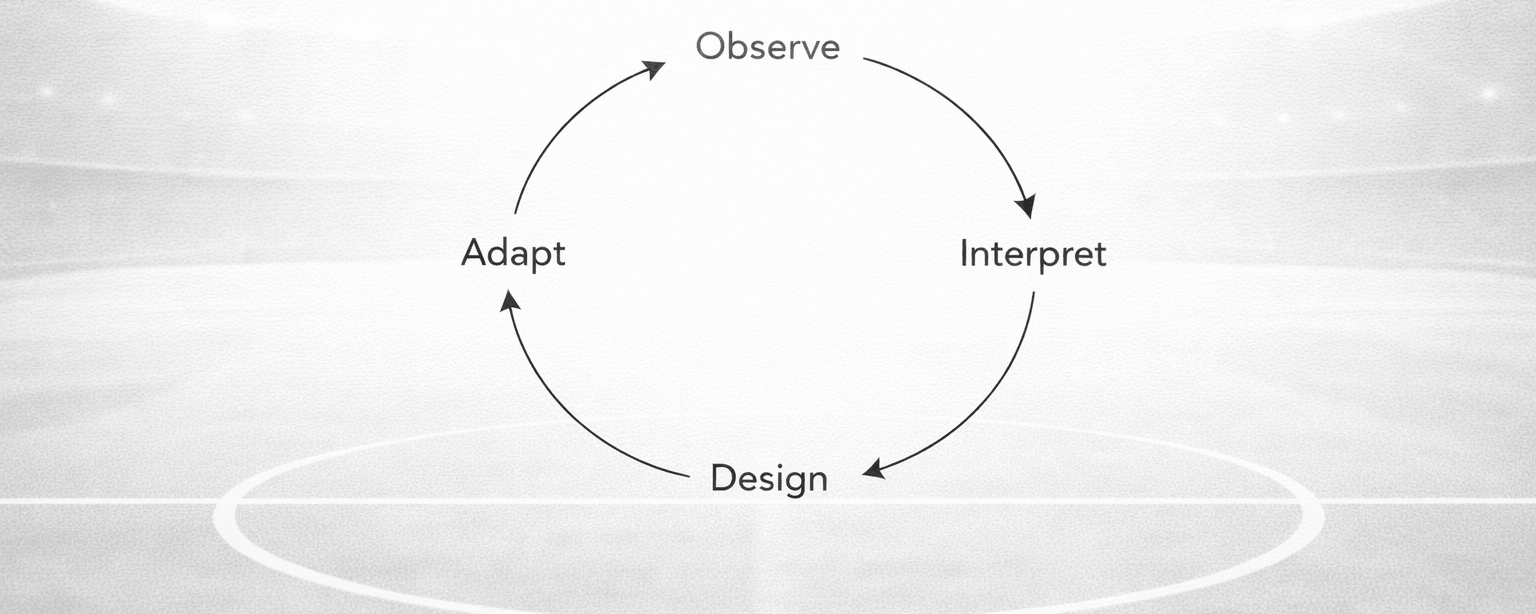
Most coaches still believe coaching is linear. Some kind of mechanical process where the players come disassembled waiting for you to put everything together, starting with the fundamentals. When those are in place, move on to the next layer of robot building.
Because if linear coaching actually worked, you wouldn’t be constantly swapping drills. Saturday would look like Tuesday. Players wouldn’t freeze under pressure. And you wouldn’t keep wondering why nothing “sticks” no matter how many fundamentals you repeat. Wondering why you have to keep teaching them how to properly pass the ball.
The naïve assumption is that drills teach the game. Learn technique first, apply it later. Clean, logical, and totally disconnected from how players actually learn.
The game doesn’t wait for your syllabus. The mistake isn’t that you don’t know enough drills. The mistake is thinking drills teach the game.
The game is running a loop — observe, interpret, adapt — and the coach is inside that loop whether they realize it or not.
The question is not whether the loop exists. The question is whether you have a game idea to make sense of it. Without a game idea, coaching becomes a reaction. With one, coaching becomes development.
At its core, coaching is the act of directing player evolution. Every decision you make either gives that evolution direction or leaves it to chance.
II — The Full Loop (What Coaches Already Do)
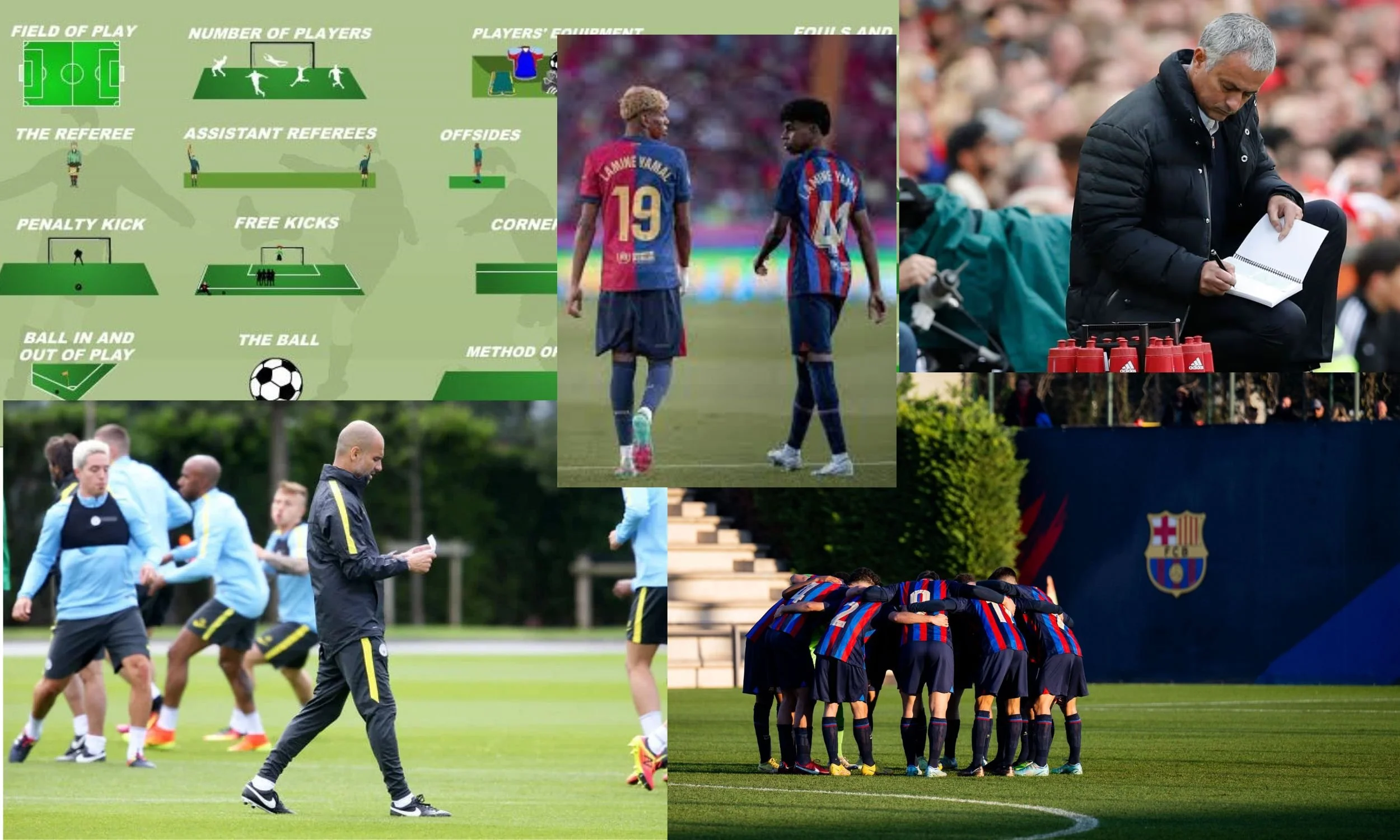
To direct evolution, you first need to understand the system that is already shaping it.
The Game Is the Starting Point
The coaching process loop starts with the game. The game is what always was and what always will be. This is where you start every single time you start coaching or playing. The game is the starting point.
This is why, when you first start with a new team, the first thing that you should do is watch them play a game, ideally a full, age-appropriate match, whether that’s 7v7, 9v9, or 11v11. Even better if they are playing against another team, like in a friendly. You could even watch videos of the team with their previous coach.
Observation Is Never Neutral
As you are watching the team play, you will notice that you will naturally start to interpret their play through your idea of the game. The way that you believe the game should be played.
You will notice that you will have emotional reactions to effective sequences and ineffective sequences. You will pay attention to the players who you believe to be most aligned with your game idea and the players least aligned. All of this will happen when you observe.
What is happening here is you are using your game idea to interpret the game you are watching. Your game idea is a formulation of all of your subconscious football experiences manifesting into one football ideology. This ideology is what is going to shape your attention as you watch any football game.
I don’t want to get hung up on your game idea just yet, because we will go into more detail in the next section.
Interpretation Drives Diagnosis
What’s important to understand as we continue through the coaching process loop is that your game idea becomes like your inner voice telling you whether something should have been done differently and how it should have been done. This is how you will be diagnosing, interpreting, analysing, and giving meaning to the actions you observe.
Depending on your past experiences, our interpretations of the football actions will be filtered through the game objectives and your own game idea and ultimately lead you to how you believe — with the current capabilities you have as a coach — you will be able to help your players close the gap between what you observed and what you believe to be the ideal football.
Once you have observed enough to give yourself a good understanding of what needs to be adapted to close that gap between reality and expectations, you will move into the training phase of the coaching process loop.
Training: WHAT and HOW
Again, I do not want to go too much into detail here, because I will cover this in a later section, but what you must understand is that training incorporates two aspects: the WHAT (your game idea) and the HOW (the training methodology).
The best coaches in the world have refined their training methodology to achieve the game idea with maximum effectiveness and efficiency for the context that they are in.
Bringing your game idea to life requires methods in training, both implicit (training design environments, e.g. activities, constraints, tasks, manipulations, etc.) and explicit (how you interact with players, e.g. instructions, guided questions, commands, reflections, etc.).
You will use these methods to direct attention to important variables of your game idea. With enough frequency and accuracy, the game idea is inevitable.
Adaptation Happens Through Experience
The purpose of training is for players to adapt their current capabilities to act more effectively or with more alignment to a game idea in given game situations. This is done through players experiencing situations in training so that they are able to communicate with the environment, unconsciously formulate solutions to problems, and act on their environment.
As the coaching process loop begins to close in on itself, we have to remember that football is a game where there is an opposition who is trying to achieve the same objectives as us.
You will often hear comparisons between football and other artistic endeavours, like music, architecture, or art, and although these metaphors are alluring, inevitably they fall short because of this reason.
Opposition Reintroduces Complexity
There is an opposition who is preventing you from acting in the way you want to act. This is what makes football so amazing. The opposition brings new problems, new contexts, and new applications. The game idea must be able to be applied to new challenges, which means it has to evolve.
Finally, the coaching process loop loops back to the beginning: the game. The start, the middle, and the end are all the game. Like the ocean with its waves crashing in and out for all time, football loops back towards the game without fail.
The loop doesn’t ask for your permission; it just runs.
Two Things to Hold Onto
I would like to direct your attention towards two specific aspects.
First, the loop is inevitable and does not start with some fundamental player starting point and end with some fully evolved player. It starts with 3v3 games, then 5v5 and 7v7, and so on until the player decides to stop playing. In each of those game formats, the player interacts with the game and adapts how they interact with it.
Second, you have a game idea as a coach, whether you can name it or not. It will guide your thinking, interactions, actions, plans, everything. If it’s a faulty game idea, you will be a faulty coach. If it’s a top game idea, you will be a top coach.
So the only question you should be asking yourself is: how do I become aware of it so I can improve it?
III — The Game Idea Lens (Where Interpretation Happens)
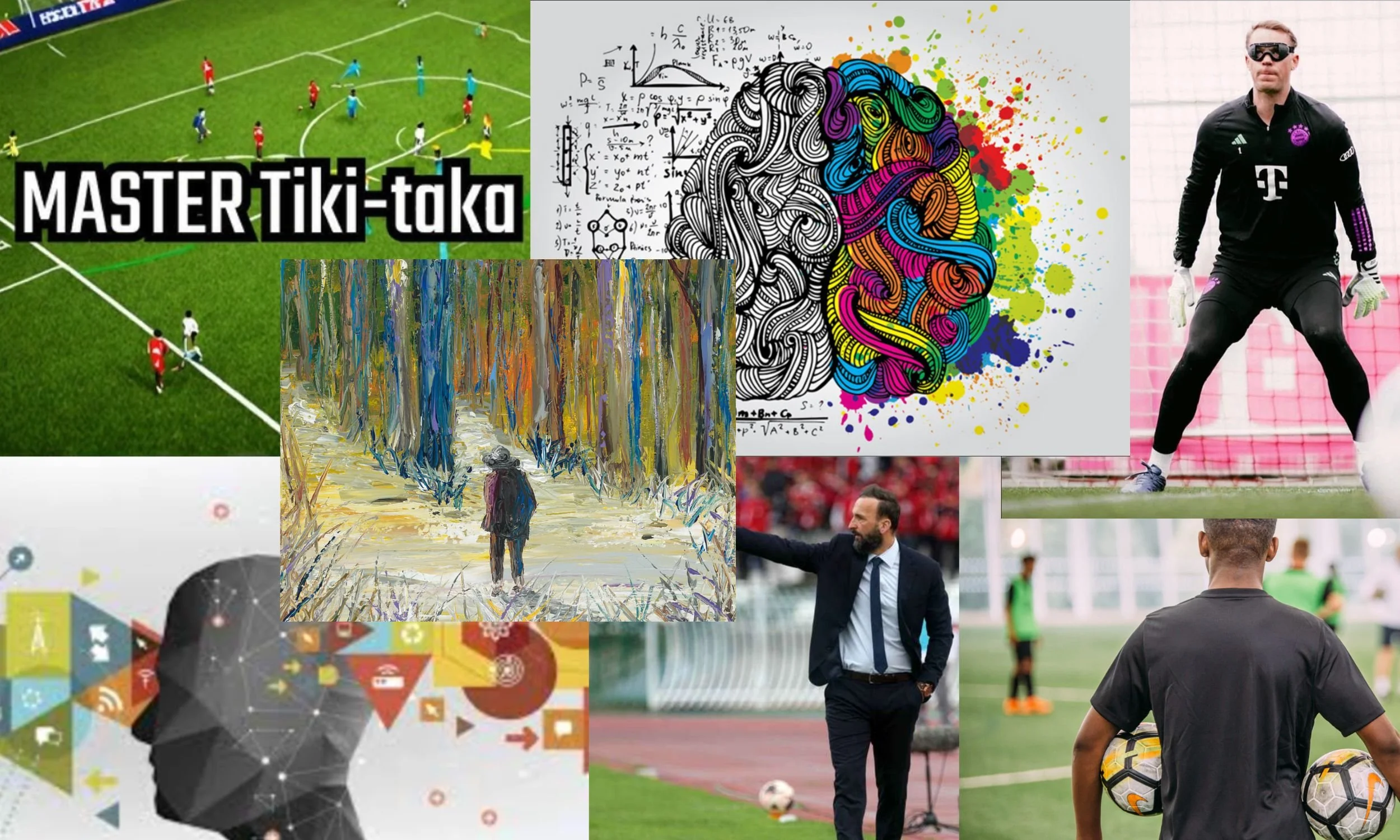
If the loop is what drives development, then your game idea is what gives it direction.
Objectivity vs Subjectivity
The coaching process loop I described above is objective. The game idea lens is what makes football subjective, for good and bad.
Your game idea is your experiences living subconsciously in your brain, guiding your attention: what you look at, what you say, what evokes passion, what triggers you, what comes out emotionally. It’s your football meaning maker. It’s your coaching perception.
A coach who grew up in Brazil will fundamentally view the same exact player actions within a match context totally differently than a coach who grew up in Norway. The coach who is 22 years old and it’s his first season will pay attention to entirely different things than the coach who is in her 30th year of coaching. The coach who has never been on a coaching course will interact with his players differently than the coach who has been on countless coaching courses on innumerable topics.
The Coaching Brain
Raymond Verheijen calls it your ‘Coaching Brain’, but what is your coaching brain made of, and how does it shape what you see, because whatever controls what you see controls the whole loop.
Let’s say that your coaching brain is everything you know as a coach, which is your WHAT (ie. your game idea) and your HOW (your methodology). But what I would like to dive deeper into is your game idea and how that is developed.
You Cannot Observe the Game Objectively
I am going to start with a potentially challenging view: you cannot observe the game objectively.
Any human being, no matter who they are, has had experiences that have shaped who they are and how they think. Therefore, from that starting point alone, we can conclude that if you are a human, you are having a subjective experience.
From a football point of view, this subjectivity is someone’s preferred football playing style or taste. You might be able to or like to define your preference of different expressions of football with labels like positional, relational, direct, associative, Brazilian, tough, defensive, gegenpressing, German, counterattacking, street, etc.
The Danger of Labels
There is a danger in labeling your preference: you become a fundamentalist. That is to say, you tie your preferences to an identity, and when this occurs, you can be blinded and fail to see shortcomings and fail to evolve when necessary. Just like religious fundamentalists. This is something that should be avoided.
What cannot be avoided is that your football idea becomes your lens, your interpretation of the game. This lens shapes what you notice and what you ignore. More often than not, this is happening unconsciously.
Attention Is Not a Choice
When you are watching your players play, you are not consciously thinking about when you were 8 and you and your father watched Michel Platini singlehandedly win France the 1984 Euro Championship. You are not consciously thinking about that one line you heard on a podcast five years ago that stuck with you. You are not consciously thinking about what your U13 coach used to say to your team during halftime talks 17 years ago.
You simply observe the game, and your attention goes where your attention goes.
I can’t underestimate how important this is.
Your attention is everything.
Attention Is the Origin
Attention is the origin of all thoughts, actions, and behaviors. Attention determines:
what enters working memory
what gets processed
what gets rehearsed
what gets assigned meaning
Motor actions are based on:
cues humans attend to
information in the environment
perceived possibilities
Behavior = action + pattern + habit over time.
Attention directs repetition. Repetition shapes behavior.
For football, it’s even simpler. What a player attends to determines what a player can do. What a coach attends to determines what a coach can train.
Therefore, attention is the bridge between idea and action. Attention determines what enters the brain. Perception shapes interpretation. Interpretation directs action. And action becomes behavior.
Seeing Determines Training
Your game idea tells you, the coach, what to attend to. You direct the players’ attention through cues, interventions, and tasks. And players learn to attend to the right information in the game.
Your game idea determines which problems exist for you.
Without a game idea, you can’t see. If you can’t see, you can’t diagnose. If you can’t diagnose, you can’t design training, which leads to throwing spaghetti at the wall and hoping something sticks.
Two Paths Forward
You have two options going forward.
Continue to go through the coaching process loop totally unaware of what your game idea is, where it comes from, and how it’s controlling your attention.
Or define your game idea, make it conscious, and use it to guide how you interpret the game, evaluate players, and design training.
With the second choice, the rest of the coaching process loop becomes streamlined.
IV — Diagnosis

But a game idea that cannot be articulated cannot shape development.
Why Language Matters
In 1914, a Parisian court was attempting to determine who was at fault for an automobile accident. The judge went back and forth interviewing the witnesses to try to figure out what had happened. Eventually, after not getting any closer to solving it, the judge decided to bring model cars so that witnesses could show the court what they remembered.
While reading about this, philosopher Ludwig Wittgenstein had a profound realization: language operates in the same way as a model, acting as a “picture” of reality that maps onto the world. In other words, language transmits the mental images that we have in our minds to others.
In this football discussion, this is vitally important. It shows that our language can bring to life our game idea. Without clear language, the game idea is muddled and lost.
When Language Breaks Down
You can see this in action all the time on social media. An X user will attempt to describe what they believe Manchester United need to be doing differently, and because of poor language, they will be misunderstood.
This also happens to amateur coaches. They do not have the language to bring to life the mental images in their mind. Regardless, their players attempt to make sense of it, and inevitably the end result is not what the coach had in mind, leading to frustration from everyone.
(Wilfried Nancy’s tenure at Celtic is a great example.)
This lack of language is not only a problem with how we communicate with others, but with how we attempt to solve problems.
Language as Diagnosis
Without proper language around the game idea, you are unable to properly define problems, which leads to developing ineffective training environments. Your language surrounding your game idea should also be able to define the context that it lives in so that you can accurately recreate it for the players in training.
If you aren’t able to articulate your game idea, most likely it’s a jumbled mess of subconscious experiences in your head. How do you think that jumbled mess will come out to players? A tattered mess, of course.
Your game idea needs intentions. Language without intention is disconnected details. The game provides the logic necessary to make your subjective ideology coherent and to bring it out in an applicable training environment.
If you have objective game intentions without your own subjective game idea, you have a sterile laboratory where players will wither over time. Your own game idea is the passion necessary to literally bring to life your game environment.
From Taste to Intention
I hope by now it’s evident that it is not enough to simply have some passion about some particular playing style. Like a good artist, you must develop the theory necessary in the craft. Before Picasso painted in his abstract style, he painted hundreds of paintings in perfect realism.
When I help coaches one on one to give their game idea language, we start with a simple exercise. Find a clip or team that triggers you emotionally. Something that you are truly passionate about. From that admiration, we move to being able to articulate, with space and time descriptors, what is actually happening, like the Parisian courthouse. Once we can accurately describe what is happening, we move to attempting to decipher intentions: what is the team trying to achieve in doing that?
Admiration (this feels right) → Articulation (what’s happening?) → Intention (what are they trying to achieve?)
Making the Game Idea Conscious
Your subconscious game idea is the start. Once you can clearly articulate your game idea, you make it conscious. With a conscious game idea, you are now able to bring it to life with actionable intentions, actions, moments, and situations. This is what clear training looks like.
Not only that, but if your articulated game idea includes team intentions for certain moments of the game, you now have KPIs that will help you measure progress in terms of playing style instead of arbitrary sport science data, like how many miles your players ran. You’re giving quantifiability to your passion.
With language to your passion, your training becomes truly functional instead of ornamental. If you skip the language stage, everything feels disconnected. You will no longer have to copy rondos without idea. You don’t have to copy pressing drills without intentions. You don’t have to copy a positional game without a context.
Your training environment becomes uniquely yours and your players’, and then the fun truly begins.
V — Training as Environment (Method Follows Idea)
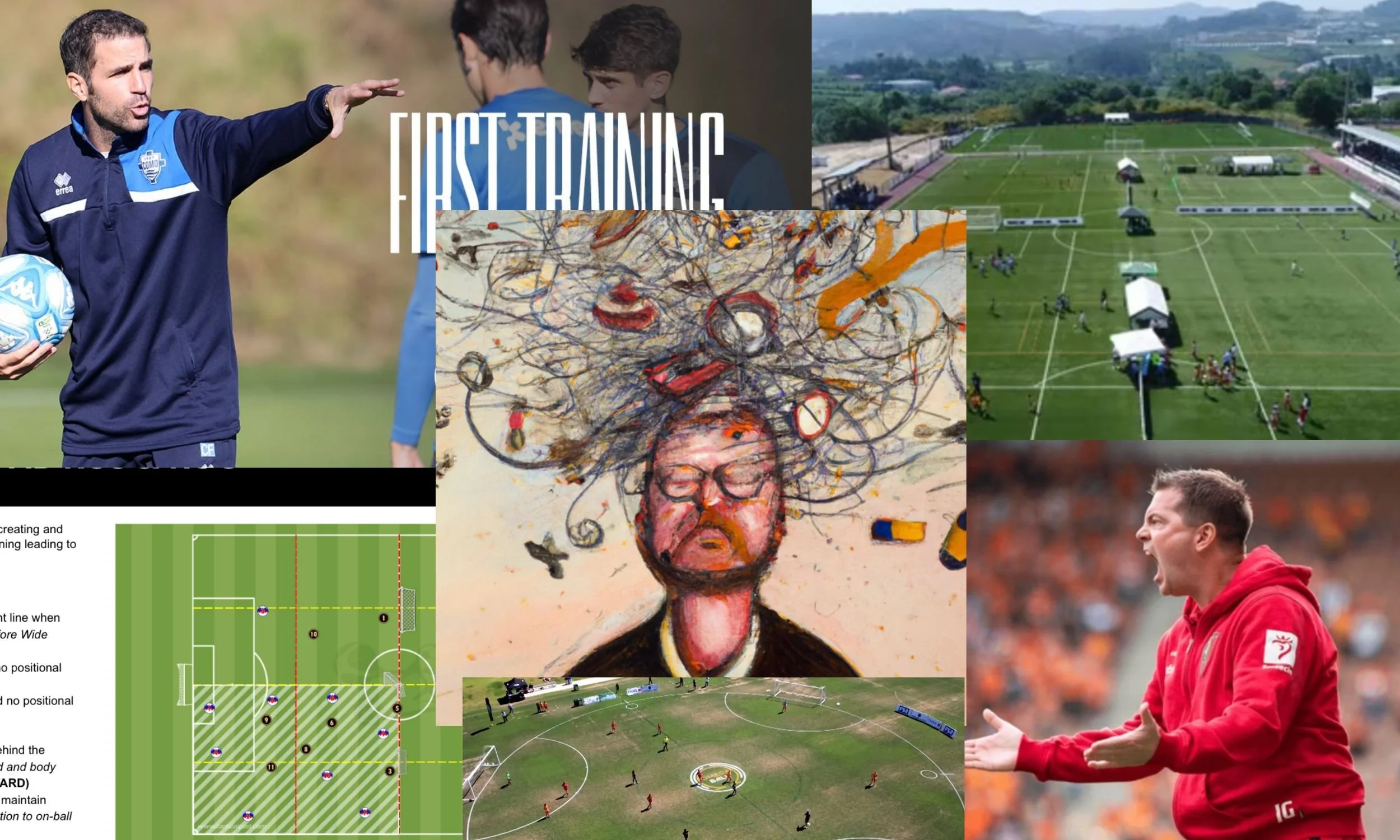
Once the idea is clear, the environment becomes the mechanism through which evolution is directed.
Philosophy Must Lead to Action
Philosophy can be a trap. A form of mental masturbation, where it feels good that you are thinking about something but never leads to action. Philosophy should inform action.
Philosophy isn’t meant to be a game to quibble over fancy words or argumentation that looks like fancy tail-chasing. Instead, philosophy should inform your actions and how you live your life. This is philosophy put to good use.
This is true in football as well. When you think about football, you should avoid thinking abstractly and instead look to apply it. Social media is littered with “football philosophers” who think in the clouds and, because they never have to apply their grandiose ideas on the grass, struggle to see why they fall short.
The grass becomes the canvas on which football moves from abstraction to reality, and training is the studio where this occurs.
Method Follows Idea
As the coaching process loop describes, the game idea, what we want to achieve, precedes the method, how we help them learn it. Philosophy informs actions. The game idea informs training.
Most coaches believe that the training process starts with the drills, games, and exercises. They believe that with enough drills, it will lead to something coherent that might resemble their game idea. This is obviously wrong.
Without a game idea, methodology collapses into drills. You end up throwing activities at players hoping something sticks.
A clear and coherent training environment is a result of repeated situations over time, with the same language used consistently. When done properly, players feel like they are stepping into a unique football bubble where their standards, routines, behaviors, intentions, and language are sacred. It’s a total football experience. As a coach, you are tasked with crafting the experience.
The Coach as Environmental Architect
As I regularly say, you are an environmental architect, because training is not rehearsal. It’s an environment.
The environment shapes what information players can pick up. What they pick up drives what they decide. What they decide becomes what they do. And what they do, repeated over time, changes what they can notice next.
Simply put:
environment → information → attention → perception → decision → action → feedback → attunement → (back to) perception
When you create the environment, you decide how the information is presented to players. That’s the game idea.
Explicit Information: Your Words
The most obvious way to present information to players in your training environment is explicitly, that is to say, with your words.
Even within explicitly delivering information through interactions with players, there are many considerations you have to take into account. For example: when are you delivering the message? How often? Are you doing so with questions or commands? Is it to an individual or the group? Are you using visual aids, like “repainting” the scenario? Are your words adapting an ineffective action or amplifying an effective one?
All of these are aspects you have to consider when deciding how you’re going to deliver information in your training environment. Each of these deliveries changes how you’ve directed your players’ attention, which means it changes their perception, decision, and action.
Really think about what this means. If you want to coach effectively, you have to consider exactly how you are going to interact with the environment.
Most coaches simply react to mistakes. A player makes a mistake, they command something different. Another mistake, another coach interaction. Player mistake, coach interaction.
Think about what kind of environment this creates when this becomes the norm. I can tell you for certain that the player will not have a positive relationship with failure, and that will hinder their development.
Implicit Information: The Environment Itself
Delivering information explicitly is just the tip of the iceberg. Your biggest tool in creating the training environment is what is not said, that is to say, the training activities.
The activities, games, and drills that players experience will deliver more information than you will ever be able to deliver. Each activity implicitly directs players’ attention through the constraints of the game.
This includes the number of players per team, the number of neutral players, the dimensions of the space, the objective, the goal location, or the rules of the game. All of these constraints shape the players’ perception.
Quite honestly, I can’t even begin to explain the level of detail required at this stage to fully comprehend how to intentionally manipulate constraints to deliver certain information. This is what coaches spend years learning to do effectively through books, coaching courses, workshops, and experience.
Constraints and Consequences
If I had to leave you with one starting principle to think about when manipulating constraints to create intentional training activities, it would be this:
Every constraint has unintended consequences.
When you know how a constraint is directing attention, you also have to consider what it’s directing attention away from.
This is the starting point of player adaptations.
This is how players improve over time.
This is where we move to next.
VI — Players Adapt (Better Footballers, Not Better Robots)
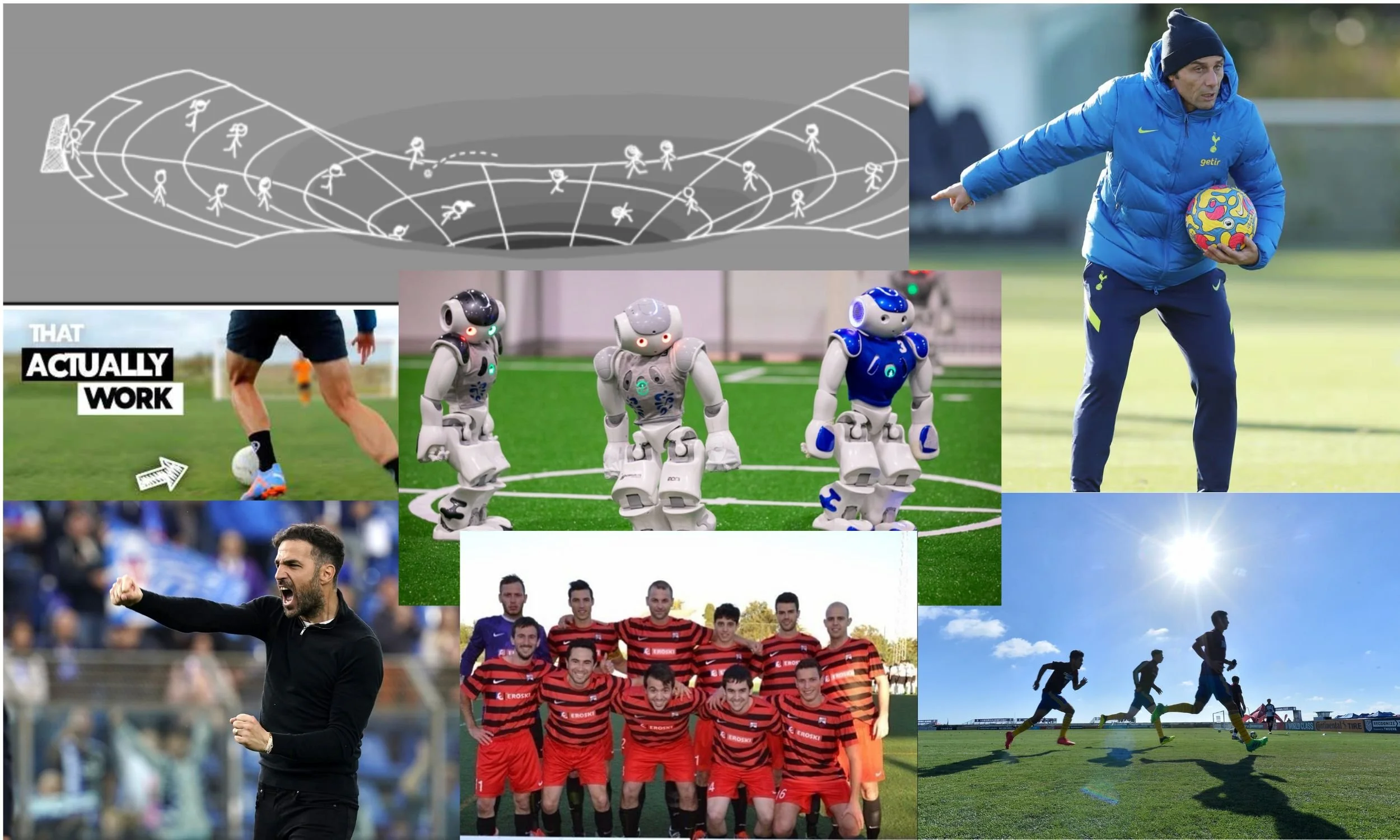
Players do not become better because they are told what to do. They become better because the environment demands more of them.
Space, Time, and Adaptation
Most people overcomplicate player development. The best players communicate with their environment, decide based on environmental cues, and execute actions more effectively and efficiently. This means that if you gather the most effective and efficient players in the world into one league (e.g. the Champions League), those games have less space and time.
As you descend down football leagues, the game, because of the players playing in those leagues, has more space and time. This means players can be less accurate and slower and still be effective. For example, when I played in Spain’s 5th division, the space/time provided to me during matches was objectively more and slower than in La Liga.
Practically, this meant that I could take a slightly heavier touch and, more often than not, still keep the ball. When I passed the ball, it could vary slightly to the left or right and still be an effective pass. As the ball moved through midfield, I could run less fast and still get to where I needed to support my teammates. All of this applies to the cognitive processes required to play as well.
I could play in this league of space/time and have relative success. If my team had been promoted to Spain’s 4th division, I would have struggled to play to the demands of the space/time provided in that league. Perhaps over time, I would have adapted to be able to play in the 4th division, meaning I would be more effective and efficient even in less space and time. This would have been my development as a player. (By the way, this is where my career ended, as I moved on to coaching full-time.)
Development as Adaptation, Not Instruction
Player development is very much like the adaptations we see in nature. When a player is placed in an environment where the game demands more efficacy and efficiency because of space/time constraints, they will improve. This is the principle of “iron sharpens iron.” Good players make good players. This is important to remember.
But let’s imagine that my 5th division Spanish team had been promoted into the 4th division on May 31st. On August 1st of that same year, when we started our campaign in the 4th division, we’d realistically have the same players as the team that played in the 5th division.
This means that our training sessions would have 5th division space/time constraints, while our matchdays would have 4th division space/time constraints. If left to our own devices, our training sessions would only be as good as our best player.
Raising the Environment vs Borrowing Solutions
Now let’s imagine that on August 1st, my team hired Cesc Fàbregas as our coach. If he was able to distill his insight into applicable guidance through effective training environments, then even if a third of our players improved and were able to play at the level of the 4th division, our training would now be at the level of our best players. In other words, seven 4th division players helping raise the level of the other fourteen 5th division players.
But now let’s imagine that instead of Cesc Fàbregas, we got Antonio Conte as our coach. If Conte told us exactly what to do in specific situations and how to do it, then we might be able to execute at the level of a 4th division team in those specific situations. There’s a chance that could get us some results and help us survive as a 4th division team.
Realistically, we’d still be 5th division players, but with some capability to perform 4th division level actions. This all falls apart the moment he leaves, the opposition figures out our specifically drilled sequences, or we stop complying with the sequences.
Development vs Performance Management
I have just explained, in one succinct story, the difference between developing players and managing performance.
One approach raises the level of the environment so players are forced to adapt. The other borrows solutions to survive temporarily. The first produces better footballers. The second produces better execution in narrow conditions.
This is the difference between players who can function only when the script holds and players who can solve problems when it breaks.
When players are exposed to environments that demand higher levels of perception, decision-making, and execution under reduced space and time, they reorganize themselves. Their attention sharpens. Their perception becomes more precise. Their actions become more efficient. Over time, what once felt fast becomes normal. What once felt chaotic becomes readable.
That is adaptation.
Intentions, Patterns, and Style
Players don’t just get faster or sharper. They develop intentions about what they are trying to do in the game.
This is why great environments matter more than perfect instructions.
And why player development is not about telling players what to do, but about shaping what they must learn to see.
A coach with a clear game idea understands this. They are not trying to control every action. They are trying to raise the demands of the environment in a way that aligns with how they believe the game could be played.
Over time, those shared intentions turn into patterns, and those patterns turn into a style. Their game idea gives direction to the adaptations they are trying to provoke.
Without a game idea, players still adapt, but they adapt randomly. Progress becomes tied to whatever drills were run that week, not to transferable understanding. With a game idea, players adapt toward something.
This is the difference between developing footballers and manufacturing robots.
VII — Opposition as Co-Designer
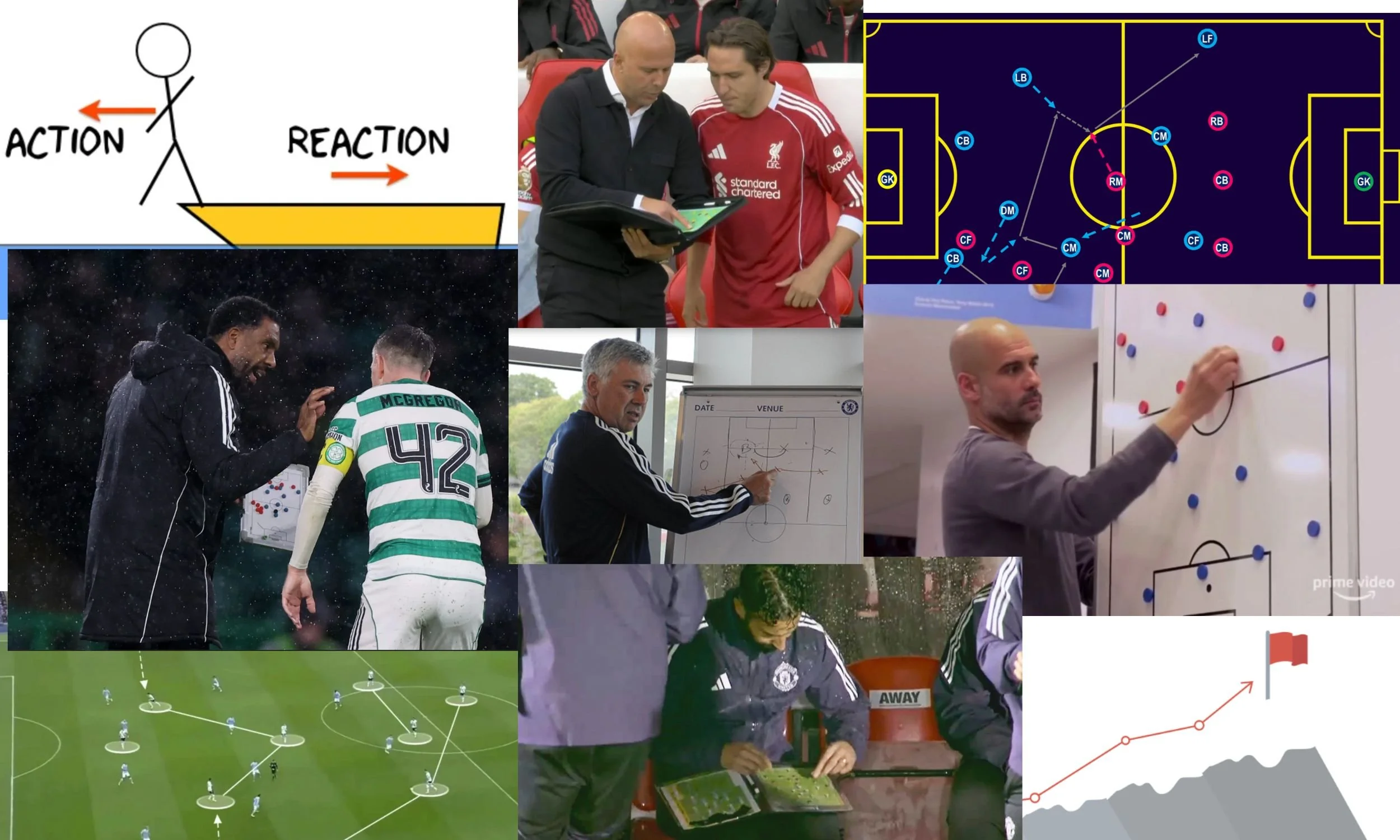
And nothing accelerates evolution faster than reality.
Action, Reaction, and the Nature of the Game
Newton’s Third Law of Motion states that for every action, there is an equal and opposite reaction, meaning forces always occur in pairs. When one object exerts a force on a second object, the second object simultaneously exerts a force of the same magnitude in the opposite direction on the first object.
I want you to think about how this applies to football, but rather than the physics application of it, think about it at the game level. It’s a very obvious fact that there is always an opposition in any football match, but this fact gets overlooked far too often in the coaching process loop.
Every football action has an equal and opposite reaction. One team moves the ball past the opposition’s back line, the opposition recovers as quickly as possible to protect their goal. One team plays a 2-2-6 in possession, the opposition can either defend with the same numbers in each line or add more numbers to the back line. One team overloads the midfield with front-line players, the opposition man-marks the midfield.
For every intention, the opponent creates a counter-intention.
This is the nature of the game. Both teams are trying to achieve the same objective while preventing their counterpart from achieving theirs. This is the nature of most games. Outsmart, outplay, outwit your opponent.
An idea that cannot survive opposition is just a preference.
Preferences vs Ideas
And this distinction matters, because preferences don’t design training environments. Ideas do.
This truth is vital in the training environment process.
When done properly, a training environment should incorporate as many game situations for players to experience as possible. By definition, a game situation is a game problem. These game problems have two main characteristics:
An objective – what each team wants to achieve.
Obstacles – what is getting in the way of achieving it, i.e. opponents.
Imagine if you had a training environment where the objective was easily achievable because there weren’t any obstacles in the way of achieving it. In other words, no opponents. Would that help players adapt their abilities to play in less space and time?
Opposition as Information, Not Noise
Equally important is understanding how to implement obstacles and opponents in a manner that accurately represents how opponents would get in the way during a match, i.e. tactics.
A good coach is able to describe and explain opposition tactics. Not to solve the game for players, but rather to use that insight about opposition trends to incorporate them into training situations. How explicitly or implicitly what the opposition does is delivered depends on the level of football. Nonetheless, understanding the counteractions and counter-intentions of football is a cornerstone of designing effective training environments.
Quite frankly, most coaches are unable to describe, in actionable language, what opposition teams and players do. And when you can’t describe what the opponent is doing with observable language, you fall back on jargon and clichés. You talk about “desire,” “intensity,” or “being more compact,” without being able to explain how or why those things are actually emerging.
When that happens, opposition stops being information and becomes noise. And if opposition is just noise, the coaching loop breaks.
Because now there is nothing concrete to interpret. Nothing specific to diagnose. Nothing meaningful to design training around.
When the Loop Tightens
But when a coach can see opposition clearly, something different happens.
The game stops feeling chaotic and starts feeling legible. Patterns emerge. Problems repeat. Counteractions become predictable. And suddenly, the loop tightens.
The game shows you something. You interpret it through your game idea. You design environments that reflect both your intentions and the opponent’s counter-intentions.
Players adapt.
Then the game shows you something new.
This is where coaching stops being reactive and starts becoming iterative.
Which brings us back to the game itself.
VIII — Return to the Game (Identity Through the Loop)
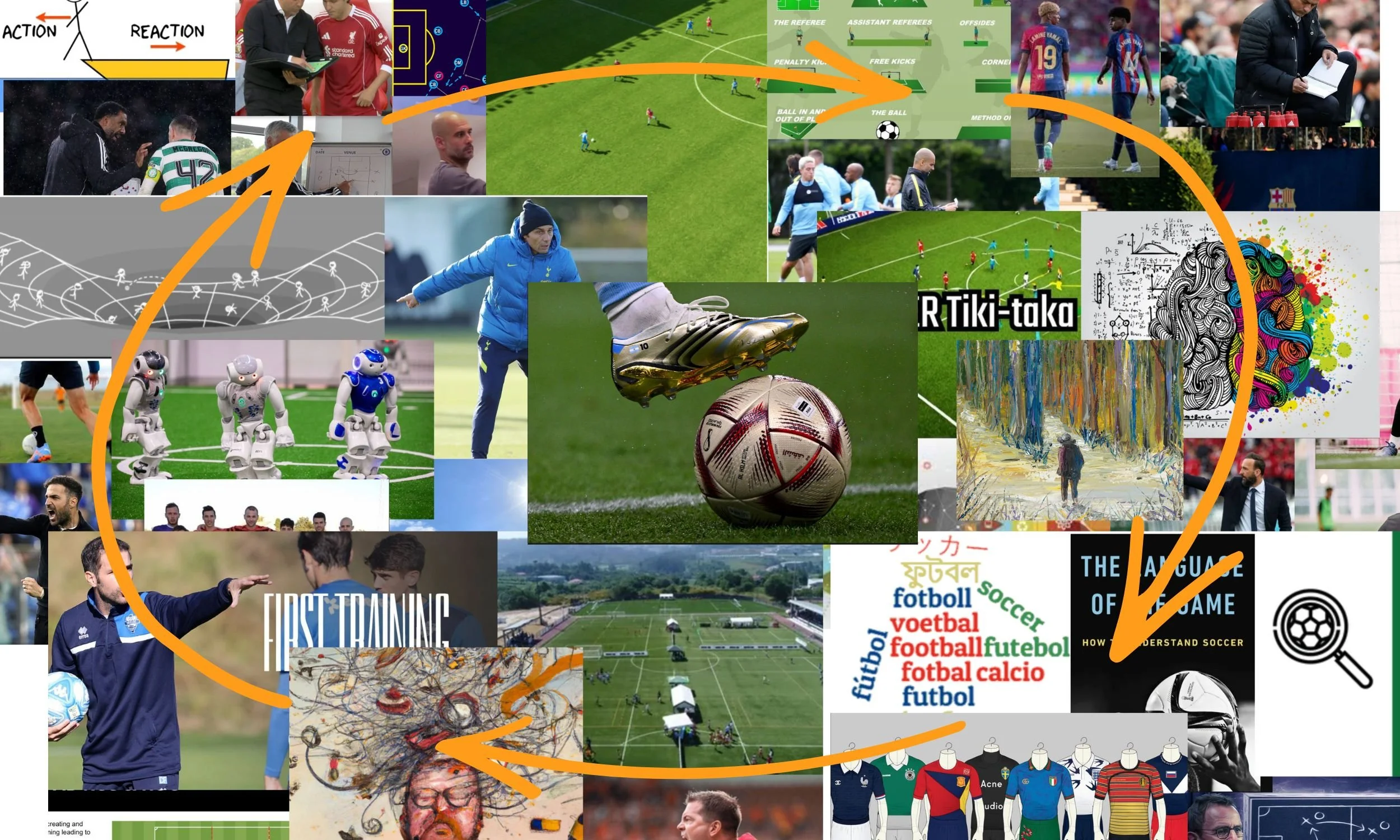
Over time, directed evolution produces something every great coach eventually recognizes: identity.
The Loop Never Stops
And so we return. Back to the game. Back to where we started. Nothing has been “completed.” Nothing has been solved. The loop simply runs again.
But it does not run the same way.
Your players walk back onto the field having adapted. They see more than they did before. They feel pressure sooner. They recognize situations earlier. They act with slightly more intent, slightly more clarity. Not because you told them what to do, but because the environment demanded it.
And you, as the coach, are no longer seeing the same game either.
Coaches Adapt Too
You notice different problems now. Different moments matter. Your attention sharpens. What once felt chaotic begins to feel structured. What once felt random starts to show patterns. The loop hasn’t stopped. You’ve changed inside it.
This is the part most coaches miss.
The coaching process loop does not just develop players. It develops coaches.
Each time the loop runs, your game idea is tested against reality. Some parts survive. Some parts don’t. The game pushes back. The opposition exposes weaknesses. Players succeed in places you didn’t expect and struggle in places you assumed were obvious.
If you are paying attention, your game idea evolves. If you are not, it hardens.
From Adaptation to Identity
Over time, something deeper begins to emerge. Not a tactic. Not a formation. An identity.
Your team starts to behave in recognizable ways across different matches, different opponents, different contexts. There is continuity. There is coherence. There is a throughline in how they solve problems.
And just as importantly, you become recognizable as a coach.
Not because you run certain drills.Not because you use certain buzzwords.
But because of the kinds of problems you consistently prepare your players to solve.
This is what identity actually is.
It’s not branding. It’s not philosophy statements.
It’s the accumulation of adaptations over time, shaped by what you repeatedly ask the game to demand.
The Uncomfortable Truth
And this is where everything becomes uncomfortable.
Because if you don’t have a game idea, the loop still runs.
Players still adapt. Training still happens. Matches still get played.
But the loop never converges on anything meaningful. Adaptations scatter. Progress becomes situational. Performance depends on compliance, opponents, or whatever drill happened to be run that week.
There is motion, but no direction.
The Only Real Choice
So the real questions are not theoretical.
What are your players adapting toward?
What information are they being trained to perceive?
What kinds of problems are they becoming good at solving?
Because the loop will answer those questions for you whether you like it or not.
The only choice you have is whether you are conscious of the answer.
WANT TO DIVE DEEPER?
Most coaches read about ideas. Few learn how to implement them.
If you’re ready to move from philosophy to application, the virtual workshops are where we build this work together.
Clear ideas. Practical training design. Real coaching language.