HOW YOU’VE BEEN CONDITIONED TO BE A DUMB FOOTBALL THINKER: WORLD CUP REFLECTION
i. Most Analysis Starts Too Late
After watching nearly every World Cup game in detail, I keep coming back to the same thought: most football analysis is too zoomed in, both in action and moment.
We start with the pass, the shot, the line break, the formation, the direct teammate who received the ball, or the player who lost it. And while all of that is still vitally important, the real explanation usually happens before the obvious action appears.
We see the ball arrive in the half-space and say the team progressed the ball. We see a team enter the final third and call it control. We see a long ball and call it direct. We see Spain pass the ball side to side and call it patience. We see a young player turn forward and call it bravery.
However, the questions we should be asking are, what conditions created the actions and how did the actions change the game? More specifically, in regard to how the game changed, what did that action change? What did it make possible next? What did the opponent have to solve? Where did the sequence actually become dangerous?
That has been one of the biggest lessons of this World Cup for me, doing a full detailed analysis of this tournament. The action is only part of the story. The relationship between actions and the game is where you have to improve.
II. Possession is not danger
One thing coaches love to talk about is possession, especially with their youth teams: keep the ball, pass the ball, move the ball. But this World Cup has reminded me how incomplete it can be. Getting the ball somewhere is not the same as changing and actually affecting the game.
A team can break lines and still never actually hurt the opponent. A player can receive between lines and still have no next action except backward. A winger can receive wide and still be exactly where the defense wants them. A team can enter the box and still create nothing more than a hopeful cross. That is where analysis needs to slow down and figure out why.
When Canada played throughout the tournament, there were moments where the idea was clear. You could see what they wanted. They had plenty of diagonal runs, passes into the next line were there, and they attempted to progress, but often the moment was not quite right: the pass was slightly behind, the touch was too heavy, the run arrived half a second early, the receiver needed one more step. Ultimately, the next action died before the sequence became dangerous.
This is the cruelty of the game: being almost right is still very much wrong.
This is why I think coaches need to be more careful with the way they talk about “good ideas.” A good idea only becomes a good action when the player can solve the moment.
I don’t believe it is enough to say, “We want to find the winger,” but instead, in what conditions can we find the winger, like facing forward? It is not enough to say, “We want to play between the lines,” but instead, can the player turn before the pressure arrives? It is not enough to say, “We want to break the press,” but instead, when the press is broken, can we force the next line to have to defend?
Simply put, did we force the opponent to have to change? Because if the opponent does not have to change, I’m not sure how much danger was actually created, how effective the attack actually was. Your stats may show possession, or even progression, but do those things show danger created?
The next action tells you the value of the first one
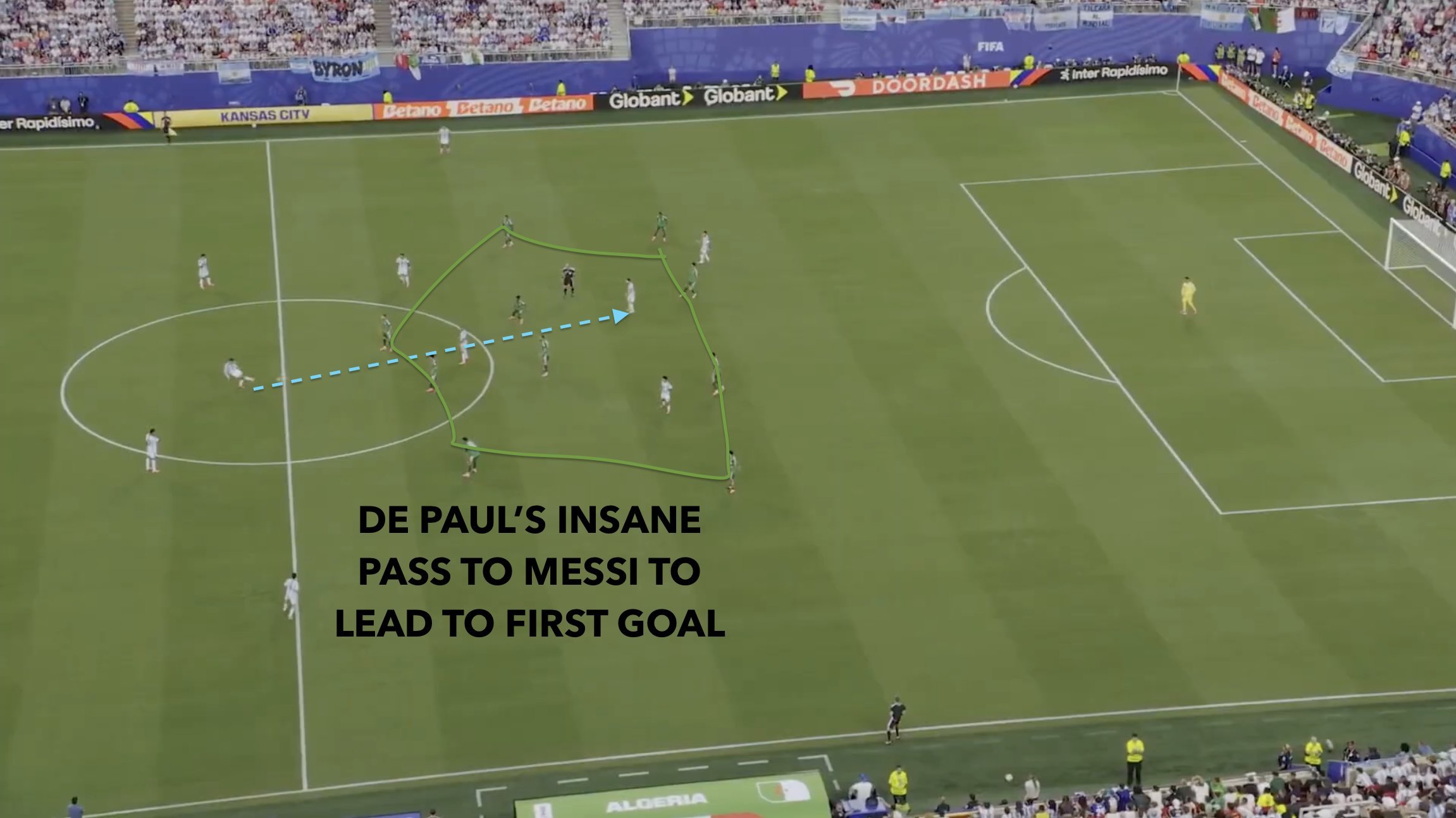
This is also why I think direct attacking, or verticality, gets misunderstood. A long ball can be awful, we obviously all know that, but direct play can also be intelligent. Colombia has shown us that.
Their long, direct passes are not some survival tactic. They play direct to isolate defenders, force duels, push the opposition backward, compete for second balls, and create the next action higher up the field. They are always ready for what comes next.
That is the difference. The first action gets judged by the second action.
If the long ball leaves your team disconnected, it is just hopeful, but if the long ball forces the opponent to defend backward, brings your players around the duel, and creates a second-ball attack, then it is a real way to progress.
This is where some football conversations become too aesthetic for me. We sometimes confuse the style we prefer with the football that is actually intelligent for each team. There are many truths: short passing can be thoughtless. Direct play can be brave. Possession can be passive. A clearance can become pressure if the team is ready to fight for the next moment.
So we have to move away from, “How did we play?” and toward what did we create and how did we create it? Did we create the duels we wanted? Did we create the second balls we were prepared for? Did we force the back line to turn? Did we give the team territory? Did we let ourselves arrive together?
The next action tells us whether the first action had intention.
And that idea has been everywhere in this World Cup. Spain’s possession is valuable because it prepares the next recovery. Colombia’s direct play is valuable when it prepares the next duel. The US were dangerous when the first dribble opened the next run. Mexico changed when Mora started turning forward and keeping the next action alive. Canada struggled when the first action was fine, but the next action never quite arrived.
The game is not one action, it is the relationship between actions.
III. Spain and the invisible game
Spain are the best example of this.
I understand why some people find them boring. You watch them circulate the ball, move side to side, build triangles, reset, and do it all over again another 47 more times. The rhythm can feel slow if you are only watching the ball, but I think that is exactly why Spain are so easy to misunderstand.
The ball is the most visible part of their dominance, but it is not the whole explanation. What makes Spain frightening is what they are doing around the ball.
Against Austria, the thing that stood out to me was not just their possession. It was how they prepared the next defensive moment before the ball was even lost. Cubarsí close to the outlet. Laporte ready to cover. Rodri and Pedri near enough to jump. Cucurella close enough to press. The far-side players connected enough to stop counterattacks.
So when Austria finally won the ball, they did not really win progression; they won a new problem that Spain had created prior to losing the ball.
Austria would recover possession and immediately run into a Spanish player close enough to intercept the next pass. The first outlet was marked, the second pass was tough, the forward option was already being mitigated. Within one or two passes, the ball was back with Spain, and then Spain would start again.
This is where their possession becomes psychological. It is not just that they keep the ball. It is that when you finally get it, you feel like you cannot keep it.
This ruins a team psychologically speaking. They start to rush, they start to clear, they stop believing the next pass is even possible, they begin to feel trapped before they even try to get out.
Austria were not a bad team, and Portugal were World Cup contenders. But against Spain, there were long stretches where they both looked like they could play three more games against Spain and still not score. That’s not an accident. It happens because Spain attack in a way that already thinks about defending.
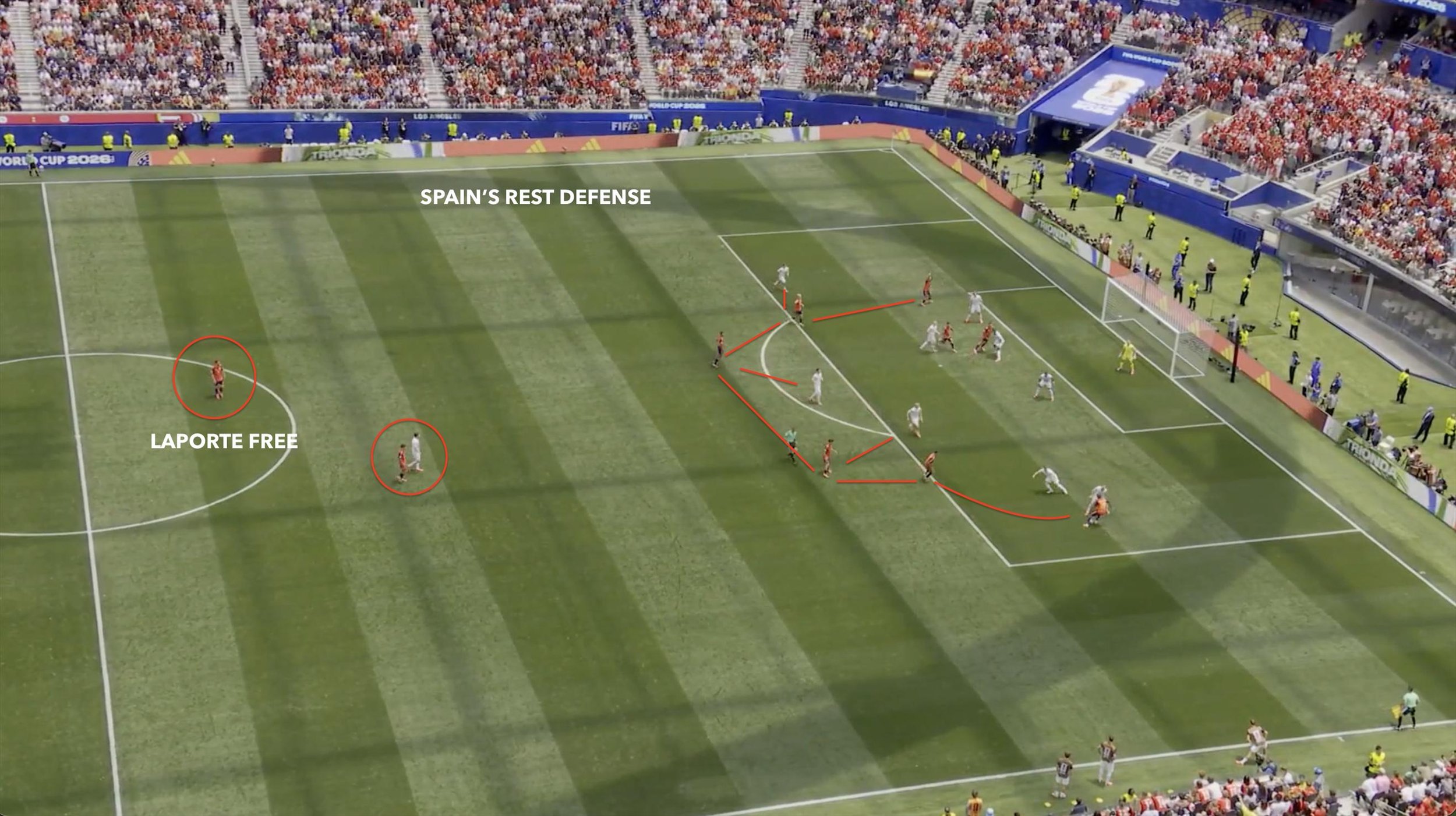
This is where coaches can take something practical. Rest defense is not just “having players back.” Rest defense is the organization of the next moment.
Who is close to the outlet? Who is free to cover? Who can jump if the first pass is played? Who is close enough to stop the counter before it becomes a counter? Who is thinking about the opponent while your team still has the ball?
At youth levels, players often disconnect when their team has possession. The winger watches. The center back relaxes. The far-side fullback forgets the outlet. The midfielder decides the attack is someone else’s job. Spain show the opposite. They connect all moments of the game. Everybody is still in the game. Even the players who are not touching the ball are shaping what happens next. That’s why they suffocate teams, and that is why a broadcast camera can make them look more boring than they really are.
IV. The camera is teaching us to watch poorly
This might be the biggest problem with how most of us learn to watch football. The camera follows the ball, so our eyes follow the ball, then our language follows our eyes, and before long, we start to think the game is wherever the ball is.
But some of the most important parts of football are not on the screen.
When Spain lose the ball and win it back immediately, the broadcast may show us the tackle or the recovery. It might not show us Cubarsí standing close to the outlet five seconds earlier. It might not show us Laporte organizing behind him. It might not show us Rodri adjusting three steps closer before Austria even receive.
So the viewer sees Austria lose the ball and thinks, “They are poor in possession.” That could be so, but maybe Spain removed every comfortable possession before Austria had a chance to play. This is how you begin to think about football in connected moments, something in Spain that is so ordinary and commonplace.
This is why your analysis has to fight against your instinct, which you have been conditioned to learn from many years of matches on television. The ball is the easiest thing to see, which is exactly why it can mislead us.
The broadcast shows the event, but coaches need to see the conditions. This will change your thinking.
V. Shape is where analysis begins
This is also why formation talk can become so empty.
I am not against naming shapes. We need some common language. It definitely helps us orient our attention and chunk our thoughts, but they are not the analysis yet.
A shape tells us where players are, their position at a certain arbitrary moment in time, but it does not tell us how they are interacting. It does not tell us who is being provoked, who is being protected, who is being ignored, who is being baited, who is responsible for the outlet, who has to defend two players, who receives facing forward, who is close enough to jump, who is late.
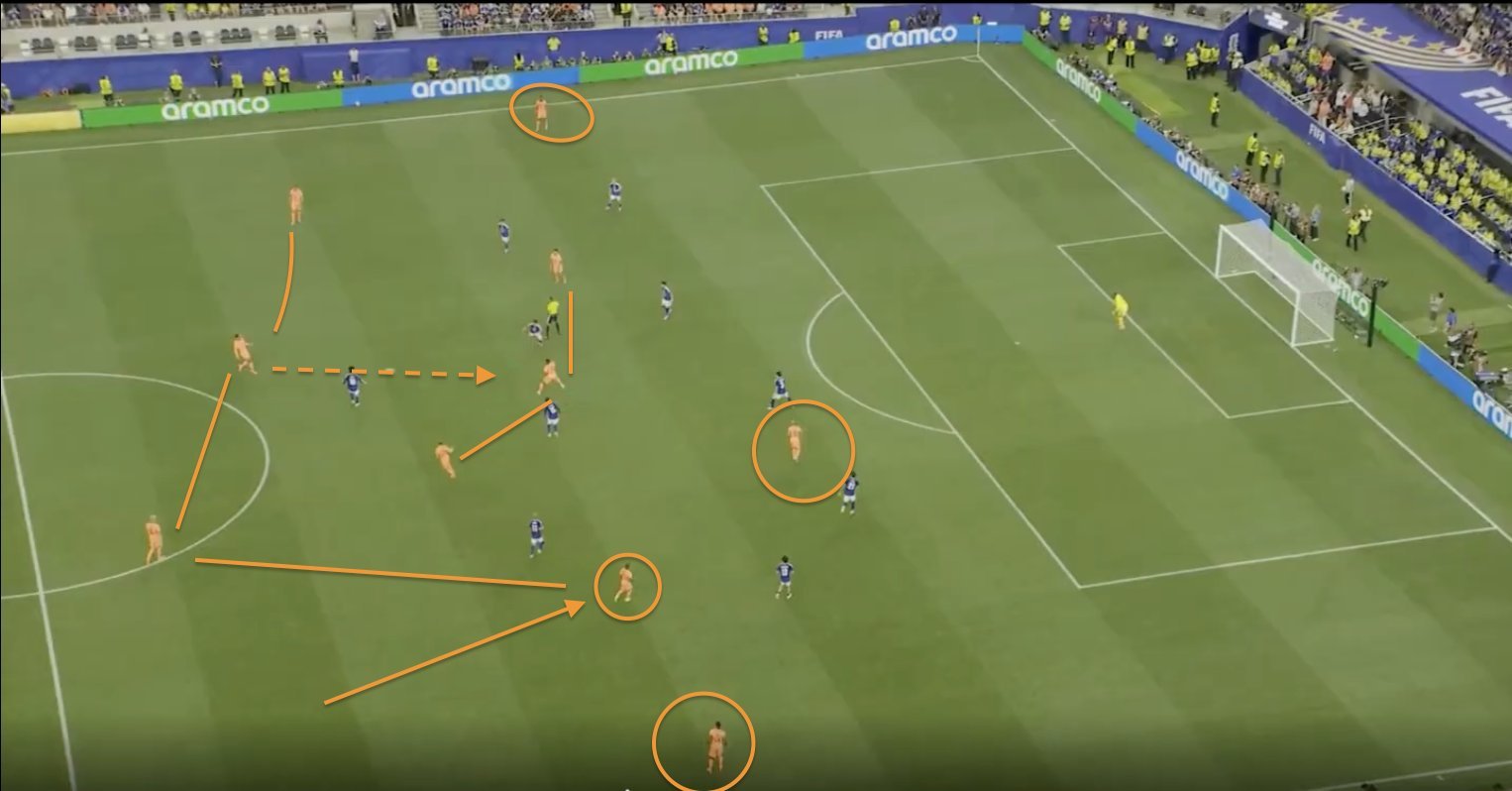
When you start thinking and asking questions like those, you are finally thinking about football and coaching in detail.
Football is not a tactics board. A formation is a noun, but the game is verbs!
Pressing. Covering. Jumping. Delaying. Pinning. Dragging. Arriving. Turning. Breaking. Supporting. Protecting. Recovering.
This is football.
So when we analyze our teams, or any match for that matter, the question cannot stop at: what shape were they in? It has to become: what did the shape allow? What did it deny? Where did it break? Who was asked to solve the hardest problem? What did the opponent do in response?
Doing so will allow your analysis to move into real, effective coaching.
We are no longer saying, “We need to be better in a 4-3-3.” We are saying, “When our fullback jumps, our six has to be close enough to protect the channel.” Or, “When our winger comes inside, our fullback needs to recognize whether to provide width or stay deeper for rest defense.” Or, “When we break the first line, the receiver needs to drive at the next defender instead of taking the safe touch away from pressure.”
Analysis becomes insight with detail, and from here it becomes training.
VI. Bravery is a football action
That brings me to Gilberto Mora.
One of the most refreshing moments of the tournament for me was watching him play for Mexico. Mexico had looked organized and functional in their earlier games. They defended effectively, they stayed compact, they avoided giving up too much, but in possession, there were long stretches where everything felt cautious, and it wasn’t just Mexico who played like this.
Verbs: Receive. Feel pressure. Play back. Receive. Check shoulder. Decide safety. Receive in a decent space. Never quite turn the action into anything dangerous, possession for possession.
Then Mora starts against Czechia, and the team looks different. He receives, turns, faces forward, and drives. That may sound simple enough, but it’s far from it, especially for a 17-year-old at this stage. Especially in a World Cup. Especially with the weight that comes with playing for Mexico.
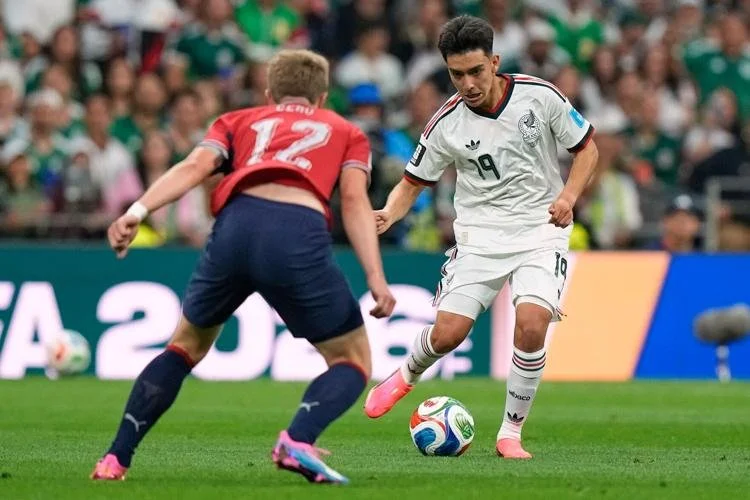
What stood out was not that every action came off (it didn’t; in fact, his loss of possession led to England’s second goal), it was his instinct. He kept the game driving forward when safety was available. That is bravery in football terms.
And I think that is important for coaches, because we use the word bravery too loosely. We say, “Be brave.” But what does that actually mean? Give it actionable, observable verbs.
Bravery is receiving under pressure and turning when the easy pass is backward, like Kylian Mbappe. Bravery is taking the first touch forward, like Martin Odegaard. Bravery is carrying the ball until the defender has to make a decision, like Luis Diaz. Bravery is making the run you may not receive because it creates space for someone else, like Michael Olise. Bravery is staying close to the outlet when your team has the ball because you know the next defensive moment is coming, Rodri. And when it doesn’t work out, to try again, like Jude Bellingham.
Bravery is not brazen recklessness or some disregard for risk. It is the willingness to keep solving the game when the safer action would let you hide.
This is one of the biggest youth development questions for me. How many players have we trained to choose safety too early? How many players have learned that not making a mistake is more important than changing the game? How many environments reward sterile possession but punish the player who tries to turn possession into danger? Not Paris street games, that’s for sure.
Mora, and many other brave players, are exciting because they remind us that football needs players who are still willing to disturb the game.
And coaches have a responsibility to protect that.
VII. A better way to watch
So maybe the bigger lesson from this World Cup is not tactical in the narrow sense; maybe it is about perception.
How do we learn to watch the game in a way that gets closer to the truth?
I think we need to stop treating actions as isolated events. Instead of asking only, “What happened?” we need to ask: what led to that moment? What new conditions did the action provoke? What became possible next? Who was ready for the next moment? Where did the sequence stop being dangerous? And why, why, why? Always more whys!
A simple way to think about it is this: first, ask what the action created. Did the team access space, a player, a line, a channel, or the final third? Then ask what it changed. Did the opponent shift, turn, jump, hesitate, collapse, or open? Then ask what it made possible next. A dribble? A pass? A shot? A cross? A counterpress? A second ball?
Then ask who was prepared. Were the off-ball players connected? Was the rest defense in place? Were second-ball players close? Was the next pass available? Then ask where the sequence died. Touch. Timing. Pass weight. Decision. Support. Body orientation. Opponent pressure.
This is where football analysis becomes coaching, because it moves us away from simply describing the game and toward understanding the problem inside the game. And once we understand the problem, we can design training that actually connects to it.
VIII. The game beneath the game
The more I watched this World Cup, the more I felt like the obvious game was only one layer. There is the game everyone sees: the pass, the goal, the mistake, the dribble, the formation, the long pass, the save.
Then there is the game underneath: the outlet being removed, the defender being forced to choose, the player arriving one second too early, the midfielder staying close enough to jump, the brave player choosing to turn, the far-side runner creating a decision without touching the ball, the team preparing to defend while still attacking.
The latter is a far more interesting game, and I think it is the game coaches need to learn to see.
Because the surface of football is lazy punditry. It gives us easy language, clichés: Titi taka, long balls, formations, width, low blocks, directness, bravery, heart. But all those words only matter when we can point to the action, to the actual verb instead of a noun.
Control is not simply about having the ball. Control is what the opponent can and cannot do when they finally get it. Progression is not simply moving the ball forward. Progression is whether the next action becomes more dangerous. Bravery is not simply an attitude, but instead a player choosing to keep the game going forward even under pressure. Direct play is not unsophisticated or anti-football, but instead an effective tool when you prepare the second action.
Your analysis should not be just naming what happened. Strive to make your analysis understand why it happened.
That is what this World Cup has reminded me. Most analysis starts too late.
The real game often begins before the action we notice. And the more we learn to see that, the better we can coach.
Want to keep improving?
If this is the way you want to think about football, I write about this every week in my newsletter.
Not just what happened, but why it happened. What the game was asking. What the players had to solve. What coaches can actually take from it.
I write about the game beneath the game: analysis, training, player development, and the small details that change how we see football.